A gas water heater pilot that keeps going out is almost always a safety control doing its job: the flame sensor (the thermocouple) is worn, the burner is short of air, or the chimney is not pulling the exhaust out. Pre-war NYC buildings see more of the last two, because the heater sits in a tight cellar on an old masonry chimney.
- The pilot heats a sensor called a thermocouple. If the sensor cools, the gas valve closes on purpose.
- Common causes: a worn thermocouple, a dirty pilot, a clogged air intake, a weak chimney draft, or water dripping on the burner.
- A pilot that goes out again and again is a reason to stop relighting it and have it checked.
- If you smell gas, leave the building and call 911 from outside.
How the pilot safety works
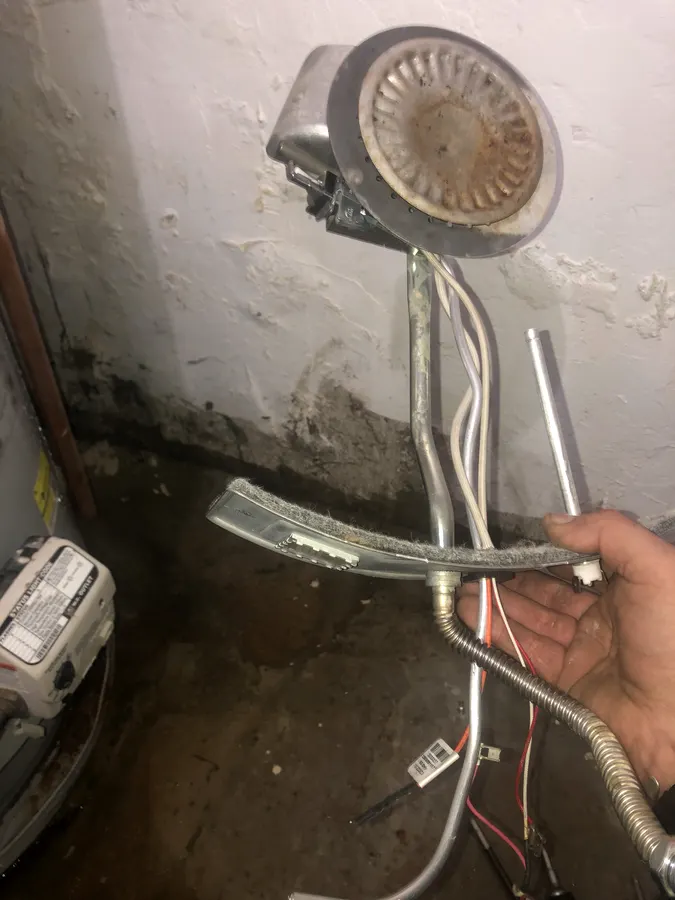
A standing pilot is a small flame that burns all the time and lights the main burner when the tank calls for heat. The tip of a thermocouple sits in that flame. While it is hot, it makes a tiny electrical current that holds the gas valve open. If the flame goes out or drifts off the sensor, the valve shuts off the gas.
Newer heaters use a thermopile and an electronic gas valve, plus a thermal switch that shuts the heater down if the sealed burner compartment overheats. Either way, a pilot that will not stay lit is a symptom.
The usual causes in any building
- A worn or dirty thermocouple or thermopile. The most common cause on an older heater.
- A dirty pilot. Dust makes a small, lazy, yellow flame that wavers off the sensor.
- A clogged air intake. Newer tanks pull combustion air through a fine screen at the base. Lint clogs it and the thermal switch trips.
- Water on the burner. A leaking tank or a dripping fitting above can put the pilot out.
- A failing gas control valve. Less common, and checked last.
Why pre-war buildings make it worse
In a Brooklyn brownstone, row house or pre-war walk-up, the water heater usually stands next to the boiler in the cellar.
The chimney. Most water heaters here vent into the same masonry chimney as the boiler. An old flue can be partly blocked by fallen brick or mortar, and a wide, cold chimney drafts poorly. When the boiler is replaced with one that vents through the wall, the water heater is left alone on a chimney sized for both. On a windy day a weak chimney can push air back down and blow the pilot out.
The air supply. A gas flame needs fresh air. Boiler rooms get sealed up over the years: a tight new door, replaced windows, storage packed around the equipment. A clothes dryer nearby competes for the same air.
The cellar itself. Lint, plaster dust and dampness are hard on the air screen and the burner. After a flood, a heater whose burner or gas valve was under water should be checked by a plumber before anyone relights it.
The carbon monoxide side of the problem
The conditions that put a pilot out can also send exhaust into the building. NYC Health lists unvented fuel burning equipment, including hot water heaters, and clogged chimneys and heating exhaust vents among the sources of carbon monoxide poisoning. The gas is colorless and odorless, and the symptoms (fatigue, nausea, dizziness, headaches) mimic the flu.
The NYC Department of Housing Preservation and Development (HPD) requires owners of multiple dwellings, and of one and two family homes that are not owner occupied, to install at least one approved carbon monoxide detector in each dwelling unit when the building has fossil fuel burning devices. If the alarm sounds, NYC Health says to open your windows, leave your home, get to fresh air and call 911.
What you can safely check
None of these involve tools or touching the gas.
- Look, do not reach. Is there water under the heater, rust streaks, or soot or scorch marks at the draft hood on top or the burner door at the bottom?
- Note the pattern. Windy days, heavy rain, the dryer running? Tell the plumber.
- Clear the area. Move boxes, paint cans and laundry away from the heater so air can reach the base.
- Test the carbon monoxide detector.
If the pilot was relit by the instructions on the heater's label and went out again, stop. Do not relight it over and over, and never tape, wedge or bypass a control.
If you smell gas, do not light anything. Leave the building and call 911 from outside. See our guide to a gas smell in an apartment.
Repair or replace?
Most pilot problems are repairs: a new thermocouple or thermopile, a cleaned pilot and burner, a cleared air screen. The draft should be tested too, because a new sensor on a heater that is spilling exhaust fixes the symptom and leaves the hazard.
Replacement makes more sense when the tank is leaking, the burner compartment is badly rusted, or parts are no longer available. A new tank on the same bad flue will have the same trouble. See our list of signs a water heater needs repair or replacement.
Owners who rent have another reason not to wait: HPD requires hot water 365 days per year at a constant minimum temperature of 120 degrees Fahrenheit.
When to call a plumber
Call a licensed plumber if:
- The pilot has gone out more than once.
- You see soot, scorch marks or water under the tank.
- It goes out on windy days, or when the boiler or the dryer runs.
- A carbon monoxide detector has gone off (leave and call 911 first).
- The cellar flooded and the heater got wet.
The NYC Department of Buildings (DOB) says on its plumbing requirements page for owners that the work it covers, including the repair of a plumbing or fuel gas piping system, can only be performed by a licensed plumber.
Nationwide Plumbers has repaired and replaced water heaters in Brooklyn since 1984, over 40 years, under NYC Licensed Master Plumber #2023. Our water heater repair service covers the pilot, the gas valve, the draft check and replacement when repair no longer makes sense.
Water heater pilot FAQ
Is it dangerous if my water heater pilot keeps going out?
The pilot going out is the safety working. The danger is in the cause: a blocked chimney or a burner short of air can put carbon monoxide into the building. Have it checked, and do not keep relighting it.
Can wind blow out a water heater pilot?
Yes. A chimney with a weak draft can push air back down the flue on a windy day. It is more common on old masonry chimneys and on chimneys oversized for the water heater alone.
Can I replace the thermocouple myself?
We do not recommend it. The part sits inside the burner compartment and connects to the gas control valve, and on newer heaters the compartment has to be resealed correctly. Call a licensed plumber.
How much does it cost to fix a pilot that will not stay lit?
It depends on which part failed, the age and model of the heater, whether parts are available, and whether the chimney or the air supply needs work too. Call 718-748-2727 for a written estimate.
Sources
- NYC Health, Carbon Monoxide (checked November 27, 2026)
- NYC HPD, Smoke, Carbon Monoxide, and Natural Gas Detectors (checked November 27, 2026)
- NYC HPD, Heat and Hot Water (checked November 27, 2026)
- NYC DOB, Project Requirements for Owner: Plumbing (checked November 27, 2026)
Call Nationwide Plumbers at 718-748-2727, we answer 24/7.