New York City requires residential building owners to provide heat from October 1 through May 31: at least 68 degrees inside between 6am and 10pm whenever it is below 55 degrees outside, and at least 62 degrees inside from 10pm to 6am no matter what the outside temperature is. Hot water must be provided 365 days a year at a constant minimum of 120 degrees Fahrenheit, according to the NYC Department of Housing Preservation and Development (HPD).
- Heat season runs from October 1 through May 31.
- Day rule, 6am to 10pm: at least 68 degrees inside when it is below 55 degrees outside.
- Night rule, 10pm to 6am: at least 62 degrees inside, whatever the weather.
- Hot water: a constant minimum of 120 degrees, every day of the year.
- If a violation is not corrected, HPD can have the repair made and bill the owner, and can seek daily civil penalties in court.
What the law requires during heat season
On its Heat and Hot Water page, HPD states that building owners are legally required to provide heat and hot water to their tenants, and it splits the heat requirement into two windows.
During the day, from 6am to 10pm, the inside temperature must be at least 68 degrees whenever the outside temperature is below 55 degrees.
At night, from 10pm to 6am, the inside temperature must be at least 62 degrees regardless of the outside temperature. In a brownstone or pre-war walk-up, that means the boiler control cannot simply shut the heat off overnight. A night setback is fine. Dropping below 62 is not.
Hot water: 120 degrees, every day of the year
Hot water is a separate requirement and it has no season. HPD requires it 365 days a year at a constant minimum temperature of 120 degrees Fahrenheit. A building that makes its hot water from the heating boiler still owes tenants hot water in July, so the boiler or a separate water heater has to run all year.
The word "constant" matters. Hot water that is fine at 6am and lukewarm by 8am usually points to equipment that cannot keep up with demand, a failing mixing valve or a recirculation problem.
What happens after a tenant calls 311
HPD tells tenants to contact the landlord first and, if that does not work, to file a complaint with 311. According to HPD, once a complaint is filed, the agency attempts to notify the owner or managing agent, may contact the tenant to see whether service is back, and attempts an inspection if it is not.
The inspector takes the outdoor temperature on every inspection. A heat violation is issued when the reading is below 68 inside between 6am and 10pm with the outside temperature below 55, or below 62 inside between 10pm and 6am. Open violations and complaint status are public on HPD Online.
What a heat or hot water violation means for the owner
HPD can start a court proceeding and seek civil penalties that run for each day from the posting of the Notice of Violation until the violation is corrected. Penalties are higher for repeat violations at the same building. HPD also charges a fee for inspections after the first two that result in a heat violation in the same heat season, or a hot water violation in the same calendar year.
If the owner does not restore heat and hot water after receiving a violation, HPD says its Emergency Repair Program may contract with private companies to restore the service and bill the owner for the cost plus related fees. HPD warns that work done through a city contractor can be significantly more expensive than what the owner could arrange independently, and that unpaid charges become a tax lien on the property.
Why NYC buildings lose heat or hot water
Most older Brooklyn buildings heat with a steam or hot water boiler, not a furnace. When the heat or hot water drops out, our plumbers usually find the cause in one of these places:
- The boiler is locked out on a safety control, such as a low water cutoff, and will not fire.
- The burner will not light or stay lit because of a pilot, igniter or flame sensor problem.
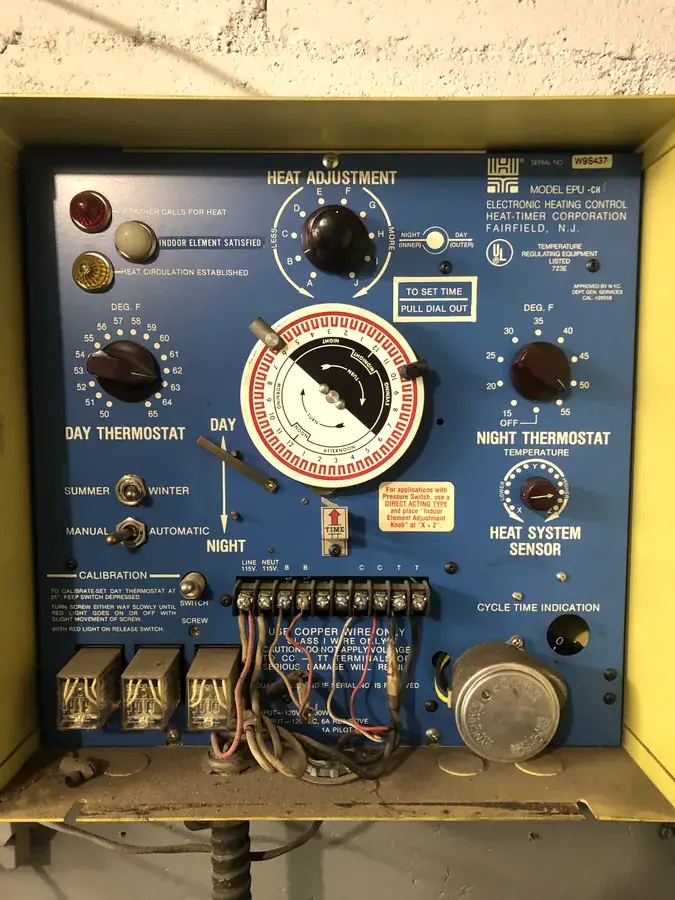
- The heat timer or thermostat is set wrong or has a failed sensor.
- On steam systems, clogged air vents or failed traps leave the top floor cold.
- On hot water systems, a failed circulator pump or zone valve stops the flow.
- For hot water at the tap, a worn coil, a failed mixing valve or a scaled water heater cannot hold 120 degrees.
Safety controls shut a boiler down for a reason. Do not bypass one or keep resetting it; have the cause found. If you smell gas, leave the building and call 911 from outside. If a carbon monoxide alarm sounds, go outside and call 911. For the checks worth doing before the cold sets in, see our winter plumbing and heating checklist for NYC homes.
What changes the cost of a heat or hot water repair
No single number fits every building. What moves the cost is the part that failed and whether it has to be ordered, the type, size and age of the boiler or water heater, whether the repair needs a permit or gas work, and whether the call comes during office hours or in the middle of the night. Call 718-748-2727 for a written estimate before the work starts.
When to call a plumber
Call a licensed plumber when the boiler will not fire or keeps shutting off, when some apartments are warm and others are cold, when hot water runs out or will not reach 120 degrees, or when you have received an HPD heat or hot water violation. Nationwide Plumbers has worked on Brooklyn boilers since 1984, over 40 years, and is NYC Licensed Master Plumber #2023. We handle boiler repair on steam and hot water systems and water heater repair and replacement, with 24/7 emergency service across the five boroughs.
NYC heat and hot water FAQ
What is heat season in NYC?
Heat season runs from October 1 through May 31. During those months residential building owners must provide heat whenever the conditions in the law are met, according to HPD.
What temperature does an apartment have to be in NYC?
Between 6am and 10pm, at least 68 degrees inside whenever it is below 55 degrees outside. Between 10pm and 6am, at least 62 degrees inside regardless of the outside temperature.
How hot does the hot water have to be?
HPD requires hot water 365 days a year at a constant minimum temperature of 120 degrees Fahrenheit. The requirement does not stop when heat season ends.
What happens if the owner does not restore heat after a violation?
HPD says its Emergency Repair Program may hire a private contractor to restore the service and bill the owner for the repair plus related fees. Unpaid charges become a tax lien on the property.
How much does it cost to fix a boiler with no heat?
It depends on the part that failed, the type and age of the boiler, whether a gas permit or utility coordination is needed, and the time of the call. Call 718-748-2727 for a written estimate.
Official sources
- NYC Department of Housing Preservation and Development, Heat and Hot Water
- NYC Department of Housing Preservation and Development, Emergency Repair Program
Call Nationwide Plumbers at 718-748-2727, we answer 24/7.