Running, leaking, loose or clogged toilet in Brooklyn? Call Nationwide Plumbers at 718-748-2727. Written quotes and 24/7 emergency dispatch.
Running toilet: flapper and fill valve
A toilet that keeps running needs a check inside the tank before anyone decides to replace the whole fixture. A worn flapper can let tank water pass into the bowl between flushes. A chain that catches or holds the flapper open can cause the same symptom. The fill valve can also fail to shut off, or the water level can be set high enough that water runs into the overflow tube.
Tell dispatch whether you hear continuous filling, occasional refilling when nobody has used the bathroom, or a weak flush followed by a long refill. These details help distinguish a tank repair from a blocked bowl or a supply problem. Avoid bending parts or tightening plastic fittings while water is still running. We can inspect the working parts and explain the repair before work begins.
Water leaking at the base
Water around the foot of the toilet can come from the tank, supply connection, bowl, or seal underneath. Drying the visible surface may help show where fresh water first appears, but it does not establish that the wax ring is the cause. Water can travel down the outside of the bowl and collect at the floor. Stop using the toilet until the source is checked.
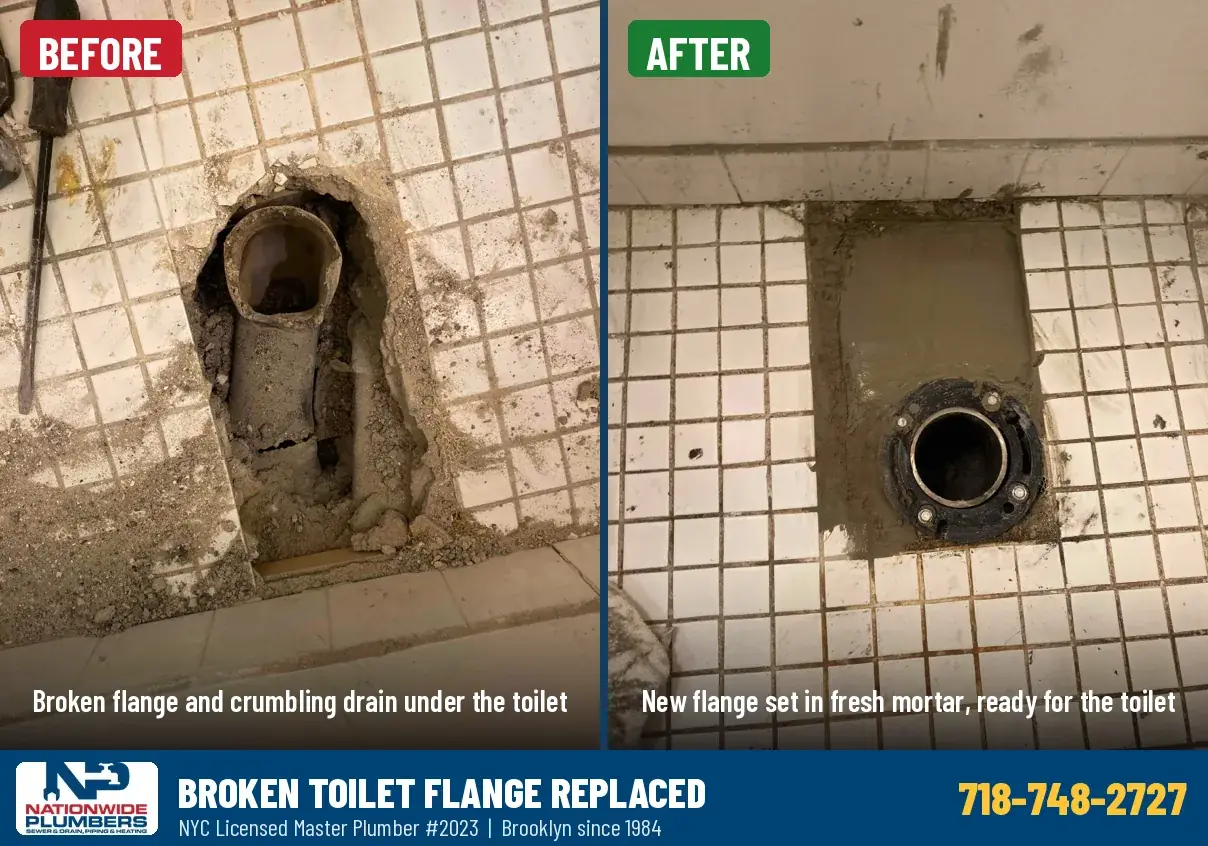
The wax ring seals the toilet outlet to the drain connection. If that seal has failed, the toilet generally needs to be lifted so the connection can be inspected. A damaged flange, uneven floor, or movement in the bowl can undermine a new seal. Simply covering the edge with caulk can hide continuing leakage instead of correcting the connection. Tell us if the floor feels soft or the room below has a ceiling stain.
Rocking or loose toilet
A toilet should sit securely without shifting when someone sits down. Loose mounting hardware can be part of the problem, but a cracked flange or weakened drain connection may also be involved. Tightening the bolts hard can crack porcelain. Keep people off a rocking toilet and avoid trying to stabilize it with improvised packing.
Our published work includes a toilet that rocked and leaked because its flange and the drain beneath it had crumbled. The crew rebuilt the drain connection and installed a new flange. You can see the documented work on Our Work. That example shows why inspecting below the fixture matters; it does not mean every loose toilet requires the same repair.
Constant clogs: toilet, drain or sewer?
If one toilet blocks while nearby sinks and the tub drain normally, the restriction may be in the toilet or its branch drain. Repeated flushing can overflow the bowl. Stop flushing when the level rises, and keep wipes, paper towels and hygiene products out of the toilet even when packaging suggests they can be flushed.
If several fixtures drain slowly, a tub gurgles when the toilet flushes, or wastewater comes up at a lower fixture, tell dispatch about the wider pattern. A shared drain or sewer restriction may be responsible. Our drain cleaning service addresses blockages, while a sewer camera inspection can help identify recurring trouble in an accessible line. Replacing tank parts will not clear a blocked sewer. In an apartment building, tell the superintendent if neighbors have similar symptoms.
When replacement makes more sense
Repair may be appropriate when the porcelain is sound and a serviceable tank component or seal is the problem. Replacement deserves consideration when the bowl or tank is cracked, the fixture cannot be secured properly without further work, or repeated repairs are failing to solve the actual issue. We explain the condition we find and provide a written quote before work begins.
A new toilet must suit the existing drain position, available clearance and supply connection. An older bathroom can have little room for changes, and the shutoff valve may also need attention. Use our plumbing fixture installation and replacement page to explore replacement work. If you already have a fixture in mind, share the model and building requirements before arranging installation rather than assuming every toilet will fit.
Brooklyn apartments and shared stacks
Older Brooklyn buildings can have cast-iron drain stacks serving multiple floors. A toilet problem inside one apartment can be connected to a branch or stack beyond the bathroom. Explain whether the symptoms follow your own flushing or occur when apartments above use water. That distinction helps direct the investigation without guessing at the cause from one visible puddle.
For a co-op or condo, contact the managing agent about insurance paperwork, access rules and any approval needed for the proposed work. Nationwide Plumbers provides certificates of insurance on request. An upstairs leak can damage ceilings below, so notify building staff promptly and arrange access to affected rooms. Do not keep testing a leaking toilet by flushing it while waiting for permission to enter the apartment underneath.
What to do before we arrive
Close the toilet's supply valve, usually on the wall or floor beside the fixture, if you can reach and operate it safely. Turn a conventional valve gently clockwise; some valves use a quarter turn. Do not force a seized valve or pull on a corroded connection. Tell dispatch if the valve will not close. Shutting the supply stops refilling but does not remove water already in the bowl or tank.
Stop flushing, keep the bathroom clear, and move items away from any active leak. Keep children and pets away from wastewater. If water is reaching electrical equipment, avoid the wet area. Give dispatch your address, apartment number, building contact and whether another bathroom is available. For active leaks or a sewer backup, call 718-748-2727 rather than waiting for a form response. Emergency dispatch answers 24/7.
Arrange toilet repair
Nationwide Plumbers has served NYC since 1984 under Licensed Master Plumber #2023, Anthony Garofalo. Our office is at 6923 8th Avenue, Brooklyn, NY 11228, with office hours Monday through Saturday, 8am to 4pm. Technicians speak English, Spanish and French. Tell us your preferred language when you contact dispatch.
A useful service request describes the symptom, when it happens and what has already been tried. Mention a recent fixture replacement, a loose bowl, water on the ceiling below, or several affected drains. We can discuss the next step and the written quote before repair work starts. Keep the toilet out of use if it is leaking or unstable, even if it still flushes.
Frequently asked questions
Why does my toilet refill when nobody uses it?
Water may be escaping from the tank into the bowl through the flapper or another tank connection. A fill valve or water-level issue can also cause running. The tank needs inspection to identify the cause.
Does a leak at the base always mean a bad wax ring?
No. Water from a tank or supply connection can collect at the base too. Stop using the toilet and have the source checked, including the seal and flange if needed.
Can I tighten a rocking toilet myself?
Avoid forcing the mounting bolts because porcelain can crack. A loose toilet may have a damaged flange or floor connection that needs inspection.
When is a clog a sewer problem?
Several slow fixtures, gurgling or wastewater backing up at a lower drain can indicate a shared drain or sewer restriction. Tell dispatch which fixtures are affected.
Should I shut off the toilet water before you arrive?
Yes, if the supply valve is accessible and moves safely. Close it gently, stop flushing and do not force a stuck or corroded valve.
Can you coordinate with my co-op or condo?
Yes. Contact your managing agent about approval and access requirements. We provide certificates of insurance on request and work with building management.