A steam boiler that keeps shutting off is usually being protected by its low water cutoff: the water level dropped below the safe line, so the control cut the burner before the boiler could fire dry. The real question is why the water keeps dropping, and in older New York City buildings the answer is most often a leak in the piping, dirty boiler water or a worn control.
- The low water cutoff (LWCO) is a safety device doing its job. Never bypass it or keep adding water to get through the night.
- Repeated shutdowns almost always mean water is leaving the system: a leaking return line, a weeping radiator valve, a vent stuck open or a leaking boiler section.
- Dirty, oily boiler water makes the water line bounce, which can trip the cutoff even when the boiler is not short on water.
- Not every shutdown is low water; the pressure control, flame safeguard or a flue safety switch can also stop a boiler.
- During NYC heat season (October 1 through May 31) a boiler that keeps going out is a code problem in buildings with tenants.
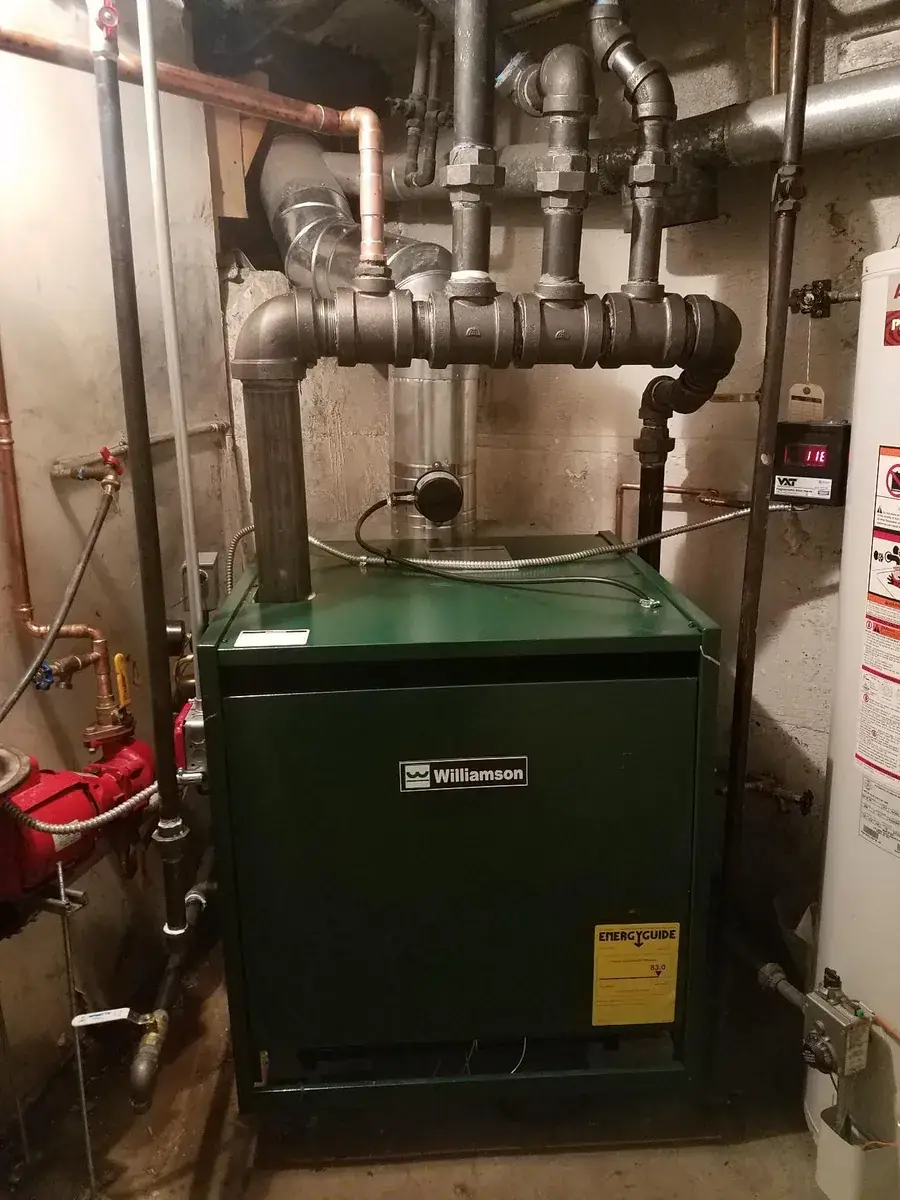
What the low water cutoff does
A steam boiler is only partly full of water; the correct water line is marked on the sight glass, the vertical glass tube on the side of the boiler. If the water drops too far, the hot cast iron above the line has nothing to carry heat away and can crack. The low water cutoff opens the burner circuit when the water falls below its set point.
Two types are common in NYC buildings: a float type, where a float in a side chamber drops and opens a switch, and a probe type, where an electrode senses whether water is touching it. Many boilers also have an automatic feeder. When any of these is dirty, stuck or wired wrong, the boiler can shut off when it should not, or stay on when it should not.
Why a steam boiler keeps shutting off on low water
If the cutoff trips over and over, water is leaving the system or the control cannot read the level. Most steam boilers we service sit in pre-war brownstones, row houses and walk-ups with original piping, so these are the causes we find most often.
Leaking return lines. Condensed steam runs back to the boiler through return piping, and in many brownstones the wet return runs under the basement floor, where rust and damp soil eat the pipe from the outside. A pinhole there loses water all day without leaving a puddle. If you add water every day or two, suspect the returns first.
Steam escaping at radiators. A vent stuck open or a supply valve with a bad packing nut lets steam escape, and every bit that does not return is water the boiler must replace. Hissing vents and damp spots near valves are clues. Our guide on what to do when a steam radiator bangs covers the vent and valve problems that often go with this.
Dirty or oily boiler water. Oil from new piping, sediment and rust make the water surge when the boiler fires. The sight glass bounces, and a float type cutoff can trip even though the boiler has enough water. The fix is skimming, not adding water.
A worn cutoff or feeder. Float chambers fill with sludge if they are not blown down, probes get coated with scale, and feeders stick open (flooding the boiler) or closed (starving it).
A boiler that is starting to leak. Cast iron sections eventually leak at nipples, gaskets or seams, and a leak inside the combustion chamber goes up the flue as steam, unseen. Rust streaks, white deposits on the jacket or water under a cooled boiler point to the boiler itself.
Shutdowns that are not low water
The pressure control cycles the burner off when steam pressure reaches its set point; a clogged pigtail under it makes it read wrong. The flame safeguard locks the boiler out if it does not see a flame. Flue safety switches shut the boiler down when combustion gases are not drawing up the chimney; never reset one repeatedly, because a backdrafting boiler can put carbon monoxide into the building. Telling the plumber the sight glass level and which reset button was lit helps sort these out fast.
What NYC heat rules mean when the boiler keeps going out
If your building has tenants, this is a compliance issue. NYC 311 states that from October 1 through May 31 the City requires building owners to provide heat. Between 6 AM and 10 PM, if the outside temperature falls below 55 degrees, the inside temperature must be at least 68 degrees Fahrenheit. Between 10 PM and 6 AM the inside temperature must be at least 62 degrees at all times. Hot water must be provided year round at a minimum of 120 degrees. A boiler that trips out overnight puts a building out of compliance before anyone wakes up.
The Department of Buildings also requires annual inspections of low pressure boilers in residential buildings with six or more families and in commercial and mixed use buildings, performed by qualified installers licensed by DOB or by an authorized boiler insurance company, with the report filed within 14 calendar days; buildings with five families or fewer are exempt. The annual boiler inspection is a good time to have the cutoff and feeder tested.
What you can safely check yourself
Look at the sight glass with the boiler off and cool; the water should sit near the manufacturer's mark. Count how often water is added: more than about once a week on a system that used to hold its level means a leak. Walk the basement and radiators for rust streaks, damp spots, white deposits or hissing vents.
Do not add water to a hot boiler that has run low; cold water on hot, dry cast iron can crack it. Let it cool, and if it fired dry, do not restart it until it has been inspected. Never bypass the cutoff or keep resetting a safety control that keeps tripping.
If you smell gas near the boiler, do not touch switches or look for the source. Leave the building and call 911 from outside.
When to call a plumber
Call a licensed plumber when the boiler has shut off on low water more than once in a season, when you are adding water regularly, when the sight glass surges or stays discolored, when you see water or rust under the boiler, when a safety control needs more than one reset, or when any radiator or return pipe is leaking. Nationwide Plumbers has serviced steam and hot water boilers in Brooklyn and across New York City since 1984. Our boiler repair service covers cutoff and feeder replacement, return line repair, skimming and short cycling diagnosis, and our boiler inspection service handles the DOB annual inspection. Work is performed under a NYC Licensed Master Plumber #2023, and we answer 24/7.
Steam boiler shutdown FAQ
Is it dangerous when a steam boiler shuts off on low water?
The shutdown itself is the safe outcome; it means the cutoff worked. The danger is in the response: repeatedly adding water, bypassing the control or firing a boiler that ran dry can crack it or worse.
How often should a low water cutoff be tested or blown down?
Follow the control manufacturer's instructions. Many float type cutoffs call for a short blowdown during the heating season to flush sludge and a functional test at least once a year; probe types need the probe cleaned and tested.
My boiler was just replaced and it keeps shutting off. Why?
New boilers carry cutting oil from the piping into the water, which causes surging until the boiler is skimmed, sometimes more than once. Near-boiler piping that does not match the manufacturer's drawing can also cause false low water readings.
What does it cost to fix a boiler that keeps shutting off?
It depends on the cause. Replacing a cutoff or feeder is a different job from finding a buried wet return or repairing a leaking boiler section, and boiler size and basement access change the scope. Call 718-748-2727 for an inspection and a written estimate.
Sources
- NYC 311, Heat or Hot Water Complaint in a Residential Building (heat season dates and temperature requirements; checked November 18, 2026)
- NYC Department of Buildings, Boiler Compliance (annual low pressure boiler inspection requirements, exemptions, 14 day filing; checked November 18, 2026)
Call Nationwide Plumbers at 718-748-2727, we answer 24/7.