Yes, in most cases. The NYC Department of Housing Preservation and Development (HPD) says natural gas detectors are required starting January 1, 2027 in buildings with gas piping. Owners of apartment buildings, and of one and two family homes that are not owner occupied, must provide and install at least one approved natural gas detector, placed near each gas appliance under the rules of the NYC Building Code.
- Start date: January 1, 2027, according to HPD and the Department of Buildings (DOB).
- Who installs: the building owner. Tenants test and maintain the alarm.
- Where: in the room with the gas appliance, 3 to 10 feet from it, on the ceiling or within 12 inches of the ceiling.
- Which device: an alarm listed and labeled to UL 1484, with an end of life alarm.
- If an alarm sounds or you smell gas: leave the building and call 911 from outside.
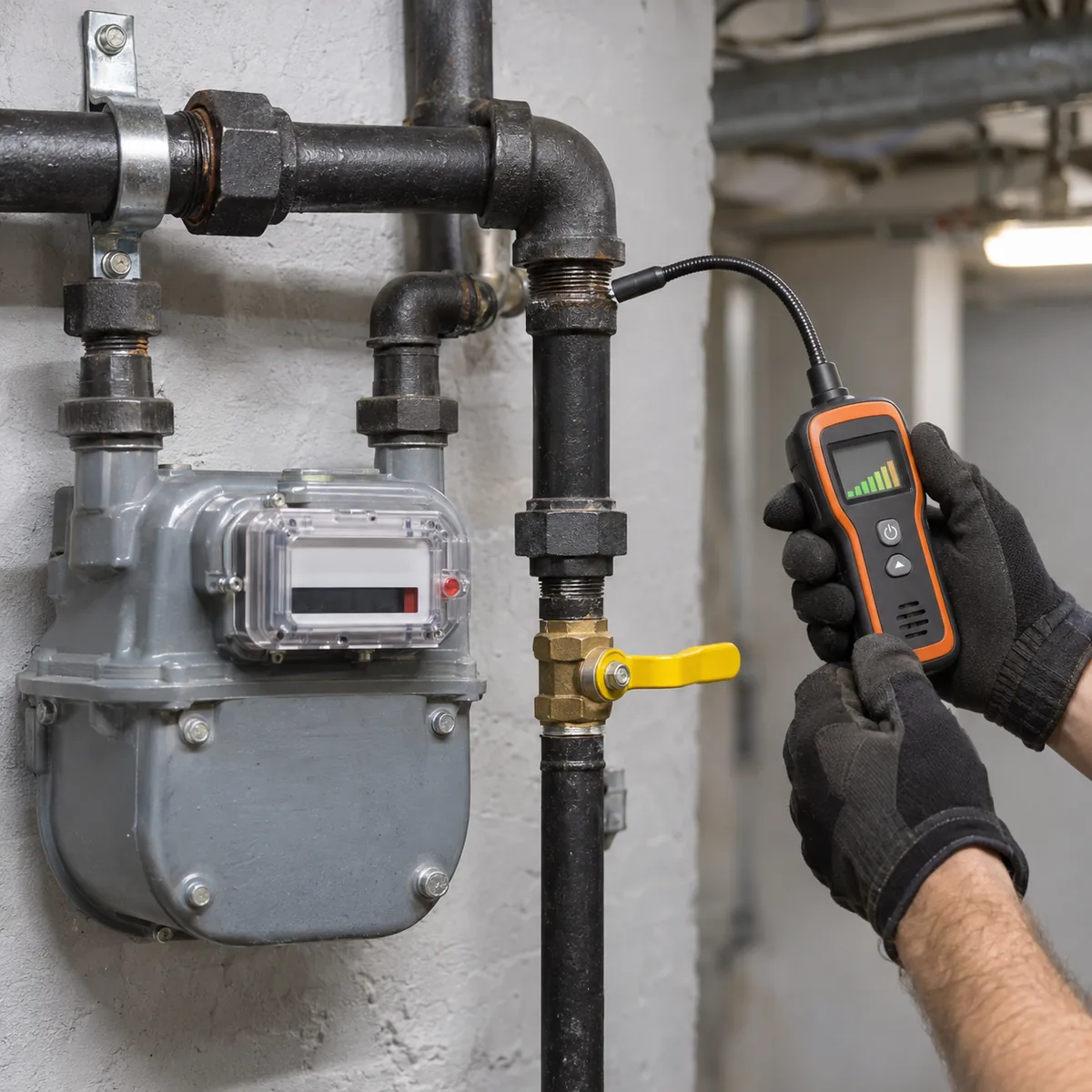
Who has to install natural gas alarms
The requirement comes from Local Law 157 of 2016. On its Detectors page, HPD says owners of all multiple dwellings (Class A and Class B) and of one and two family homes that are not owner occupied must provide and install at least one approved and operational natural gas detector when the building has gas piping.
In Brooklyn terms, that covers the pre-war walk-up, the co-op or condo building, and the brownstone or row house rented out as one or two apartments. A building with no gas piping can be exempt, and HPD says it will publish a process to file for that exemption.
Where the alarm goes
The DOB natural gas detector FAQ is specific about placement. Where a gas appliance is installed inside a dwelling, the alarm goes in the same room as the appliance, at least 3 feet and not more than 10 feet away, measured horizontally. HPD adds that it is mounted on the ceiling, or on the wall no more than 12 inches below the ceiling.
For a typical apartment, that means the kitchen with the gas stove. Two situations come up often in older NYC buildings:
- An apartment with no gas appliances still needs an alarm when the area directly below it contains a gas appliance or gas piping. DOB says it goes on or within 12 inches of the ceiling, in the room directly above.
- Common spaces that contain a gas appliance need an alarm or detector. DOB makes an exception for a boiler or water heater in a room that is centralized and restricted.
Which devices count, and who can install them
DOB does not endorse any brand. It says the alarm must be listed and labeled to UL 1484, and HPD requires an end of life alarm as part of the device.
Who installs it depends on how it is powered:
- Battery or plug-in alarms may be installed by the building owner, building maintenance staff or the occupant.
- Hard-wired alarms must be installed by a New York City licensed electrical contractor, with the required permits.
For buildings with a certificate of occupancy or temporary certificate issued before January 1, 2027, DOB allows a monitored battery as the primary power source.
What owners and tenants each have to do
The owner installs the alarms and replaces them when their useful life runs out. HPD also lists these owner duties:
- Post a notice about the detectors in the entrance area of a multiple dwelling.
- Give at least one adult in each apartment a notice about testing and maintenance when the device is installed.
- Keep records of the date each device was installed and its expiration date.
Tenants are responsible for upkeep. HPD tells tenants to test the alarm at least once a month, replace the batteries at least twice a year and never paint over it. In Class A buildings and in one and two family rentals, the owner may collect a set reimbursement for a newly installed device. The amounts are on HPD's page. DOB says enforcement is at the discretion of HPD.
Could the January 1, 2027 date move?
It has moved before. The original deadline was May 1, 2025. The City Council bill that postponed it set the new date at no earlier than January 1, 2027. According to the Council, if DOB cannot determine that enough compliant alarms are available, the deadline extends to January 1, 2029.
When we checked on November 20, 2026, both the HPD Detectors page and the DOB FAQ gave January 1, 2027. Plan for that date, and check the HPD page again before ordering devices for a whole building.
What changes the cost of getting a building ready
No single number fits every building. What moves the cost is the number of apartments and gas appliances, and whether you choose battery, plug-in or hard-wired alarms. The bigger variable is what the walk-through turns up: an old appliance connector, a corroded fitting or a gas smell that needs repair first. For gas piping work, call 718-748-2727 for a written estimate before the work starts.
When to call a plumber
An alarm tells you gas is in the air. It does not find the leak or fix it. If an alarm sounds or you smell gas, do not look for the source yourself: leave the building and call 911 from outside.
Once the building is safe, call a licensed plumber to find and repair the leak, replace a worn appliance connector, or test the piping. Nationwide Plumbers has worked on Brooklyn gas piping since 1984, over 40 years, and is NYC Licensed Master Plumber #2023. We handle gas leak detection and repair with 24/7 emergency service across the five boroughs.
A natural gas alarm is separate from the building's periodic gas piping inspection. For that, see our Local Law 152 gas piping inspection page and our guide to NYC plumbing and gas deadlines for 2027.
NYC natural gas detector FAQ
When do natural gas detectors become required in NYC?
The NYC Department of Housing Preservation and Development (HPD) says natural gas detectors are required starting January 1, 2027 in buildings with gas piping. The Department of Buildings FAQ gives the same date.
Where does a natural gas alarm have to be installed?
In the same room as the gas appliance, at least 3 feet and not more than 10 feet from it measured horizontally, on the ceiling or on the wall within 12 inches of the ceiling.
Does my apartment need an alarm if it has no gas appliances?
It can. The Department of Buildings says a unit with no gas appliance still needs an alarm when the area directly below it contains a gas appliance or gas piping.
Who pays for the natural gas detector, the owner or the tenant?
The owner must provide and install it. In Class A buildings and one and two family rentals, HPD allows the owner to collect a set reimbursement from the tenant for a newly installed device. The amounts are listed on HPD's Detectors page.
How much does it cost to get a building ready?
It depends on the number of apartments and gas appliances, the type of alarm, and whether any gas piping or appliance connections need repair first. For gas piping work, call 718-748-2727 for a written estimate.
Official sources
- NYC Department of Housing Preservation and Development, Smoke, Carbon Monoxide, and Natural Gas Detectors
- NYC Department of Buildings, FAQs: Natural Gas Detection Devices
- Local Law 157 of 2016 (NYC Department of Buildings)
- New York City Council, release on Introduction 1281-2025
Call Nationwide Plumbers at 718-748-2727, we answer 24/7.